
What Is the Practice of Place?

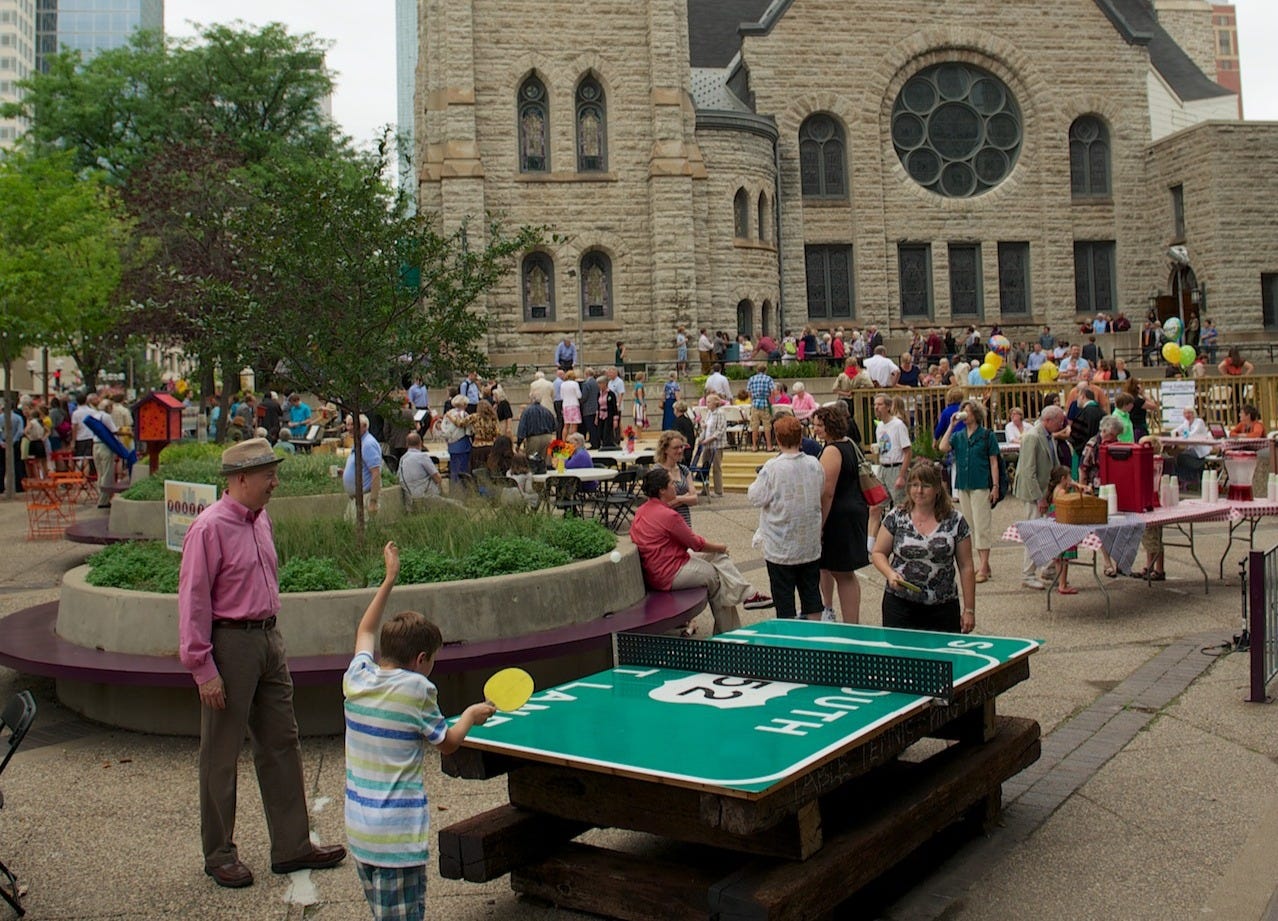
Despite decades of commentary on the importance of creating better places, the features that define them, and recommendations on how to bring them about, weak-tea places persist and in many respects seem to be growing in prevalence. The perverse effects are numerous: social isolation, a paucity of meaningful traditions, economic stagnation, and, frankly, these places just put us in a bad mood.
There is an urgency to act. The evidence suggests that a different approach is needed to stem the tide toward creating the sorts of communities where we actually want to be. This is the Practice of Place.
Place = Experience
What makes a good place? What do we mean when we say we like a place? What does it mean when we try to make a good one?
While our language defines our focus on something that seems inherently physical, what we are really after are experiences. We want to be able to do certain things and have the experience of doing those things feel good.
Say we are hungry and want to get some food. The quantity and quality of the experiences guides our choices: a convenience store is better than an empty parking lot, better than both is a dreary indoor food court with a few options, better still would be a street with a host of restaurants and cafes at various price points with indoor and outdoor seating and a nice view. More experiences are available to us in the latter. And those experiences generally feel better than the other hypothetical options.
There is a great degree of shared objectivity to these feelings — that is, agreement on what feels good. Consider when ordering food at an outdoor stall: are there places to sit and are they in the shade on a hot summer day? If these two are not in place, the experience of eating our food will be worse than if we can sit down with a table protected by shade. Very few people would choose option one. Certainly there will be different preferences for some things, but broad consensus exists far more than we realize. Quality of place means quality of experience.
Practice of Place 1: Creating more and better experiences is our goal.
Creating Place-Value
The more and better experiences a place supports, the more benefits (the more value) it then provides. The mechanics of this value creation are:
If people have positive and useful experiences in a place, they will…
Use it more frequently. By frequently using the space they establish…
Habits and routines. These habits are the foundation that support…
Relationships: between people, people and businesses, and the space itself. These relationships are non-portable and create locational…
Value: A place where people want to be that supports wellness, community and commerce, i.e., “location, location, location.”
Place-value can include but transcends mere commercial value. We can see in our own lives how the places we love the most may fulfil a commercial need for ourselves or others, but always also a host of other utilitarian, social, and even (often) spiritual needs: the social life of the cafe, the exercise and connection to nature of the walking and biking path, the sun-drenched window seat in our house, the corner table, a house of worship, an ice cream shop, a ballfield where we watch our kids play.
The places that we value the most also bring value to those people and places around them. Valuable places are almost always defined by the frequency or consistency of the experiences that happen there.
A Hierarchy of Habits
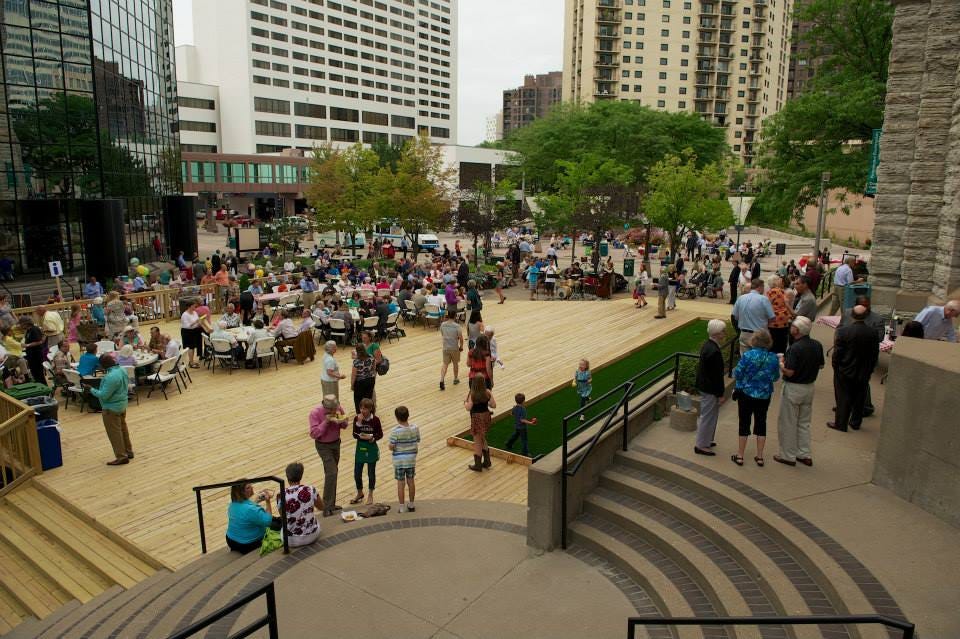
A place that supports strong positive habits unlocks a host of spillover benefits to the people, organizations, and places who interact with and surround it. A consistency of experiences that supports frequent use (i.e., habits) is the foundation of:
Relationships, which need the regularity of contact to form and deepen.
Enterprise, where retailers rely on consistent traffic and office users want to locate where employees want to be.
Housing, where people want to live in and around places that offer consistently positive experiences.
Habits, by their nature, are sticky. Once in place, they do not go away very easily. So a focus on forming positive habits of use, utility, connection, and joy:
Builds a resilient base of positive use that can withstand negative disruptions, and
Gives others a confidence in the place that in turn fosters more visitation, enterprise, and/or participation.
Consider a main street with lots of vacant spaces and businesses that don’t bring in many customers: insurance brokers, small offices, car repair shops, etc. Then, a weekly concert series starts and a new cafe opens up: now there are reasons to be there on a weekly and daily basis. The new activity drivers bring visitors who become regulars. These regulars start to get to know each other and strengthen existing relationships. Over time, the visitation to these two place-events become visibly reliable — drawing more visitation because “there’s always people there” and attracting new businesses that can leverage the increased activity — and in turn generate more, themselves. The new businesses all contribute to supporting new habits of visitation, relationship formation, and economic synergy. Once enough of these businesses (and their associated habits) are established, the main street and each individual business becomes more resilient in the face of disruptions like a neighboring business closure, road construction or bad weather.
From this vantage point, we can develop a hierarchy of prioritization, or a sequence of experiences to focus on creating in a given place: a hierarchy of habits.
Daily
Weekly
Monthly
Seasonal
Annual
Each one of these can be habit forming — an annual tradition that occurs for decades or more can be a powerful driver of activity, meaning, community and commerce. Certainly we can think of the impact of all that the Christmas holiday has on our personal, family and economic life.
But becoming a regular at your local coffee shop in the town plaza will impact your life, the commercial district and broader community more than if you visit it once a year for a holiday event. The regularity of the experience creates the conditions for strong mutually beneficial relationships to form between people, people and places, and between places themselves.
Practice of Place 2: Prioritize creating recurring experiences that support positive habits.
Experiences Created by the Whole
So, what goes into creating these experiences? The answer is the three foundations of place:
The physical environment.
The care and maintenance of that environment.
The activities, uses, and events that occur within that environment.
These three foundations are always present. The variation that matters is both in their quality and how they relate to each other.
Consider the well-designed and maintained space with nothing to do. The show-stopping festival that converts back to an empty sea of parking lots the other 355 days of the year. The interesting, but unsafe and filthy commercial district. Having two, let alone only one, of the three foundational pieces working together sabotages the chance of a place to reach its full potential.
Even when you have all three foundational elements present, the way they relate to each other can wildly alter our experience. Imagine a park with a playground, trees, bathroom and a concession stand. Version one of that park has each feature located at a far corner of the park. Version two has each in close proximity, providing greater ease for the enjoyment of each. The visitor’s experience is enhanced by the proximity. Each physical element enhances the other. The same is true for an ephemeral event or activity: the positive impact will be reduced if it is located far from the activity centers, but strengthened if it happens nearby.
Practice of place 3: Successful places are a function of how well the design, care and uses of a space work together.
Who Makes the Call
How do we make sure the three foundations of place are well integrated?
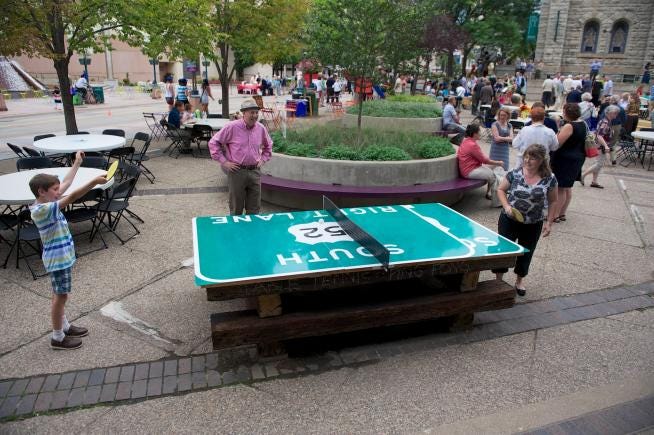
The mechanisms for creating and enacting rules, resources and decisions related to a place determine the quality of each of the three foundations and how well they work together.
A place will get better over time to the degree that it:
Has sufficient capacities for care, repair and improvement.
Conducts cycles of evaluation, discovery, experimentation and investment in what works.
Has accountability (rewards and punishment) for decision makers that is tied to the experience of the numerous end-users.
Consider your least favorite places: empty parking lots, vacant buildings, drab office blocks, boring parks. You suffer the consequences of neglect while those in charge may still gain monetary benefits and plaudits, or at the very least face no negative consequence for their inhumanity. Rarely do those in charge of these spaces have to suffer them personally.
On the flip side, why do we love going to restaurants or certain vacation destinations? Those in charge of each are directly accountable to the quality of the experience offered. If it’s good, people will buy more and come back. If not, they won’t and soon they’ll be out of business. The best public spaces are often so because of some combination of actors within the park that have this type of heightened accountability to the end-user, combined with an extraordinary amount of accountability for public agencies from external bodies to make it good.
Practice of place 4: A place will get better over time if its governance is accountable to shared success by all who are impacted by it.
Placemaking as Changemaking
But these practices are not found in all, or even most, of our public and shared spaces today — so much is out of whack. How we organize ourselves and our actions in relation to places has caused us to collectively create so many spaces that we, frankly, don’t want to be in.
Making our places better has to involve more than just changing the design, getting more resources for maintenance, and putting on more events. It’s about changing the relationships between the various elements, about changing the (recurring) relationships between the people that shape the thousands — millions! — of decisions that determine the quality of our places everyday.
We need to face up to the fact that the act of placemaking is explicitly an act of interpersonal, organizational and systemic change-making. To change what we see and experience, we must change the (small-p) political dynamics behind them.
With so many entities having a role in shaping a place, we never hold all of the authority over what happens, no matter our position. So, the process of Placemaking as Changemaking will require influencing those we have little control over, especially those who are seemingly blocking our path. We have to trade control for collaboration to achieve a vision of shared success, of a better place for all people.
So how do we do it? Our 7 Steps of Placemaking as Changemaking (aka How to Transform a Place Without Money or Authority):
Unite around goals
Reframe resources
Create your constituency
Take the next step
Communicate momentum
Drive momentum with data
Repeat!
Practice of place 5: To change a place, we have to change the interpersonal and organizational dynamics that continually shape it.
We look forward to walking this path together with you, dear reader. If you’re ready to learn more, then make sure to subscribe and check out our “start here” post, where you’ll find a curated list of our articles discussing the core concepts I’ve outlined above in more depth.